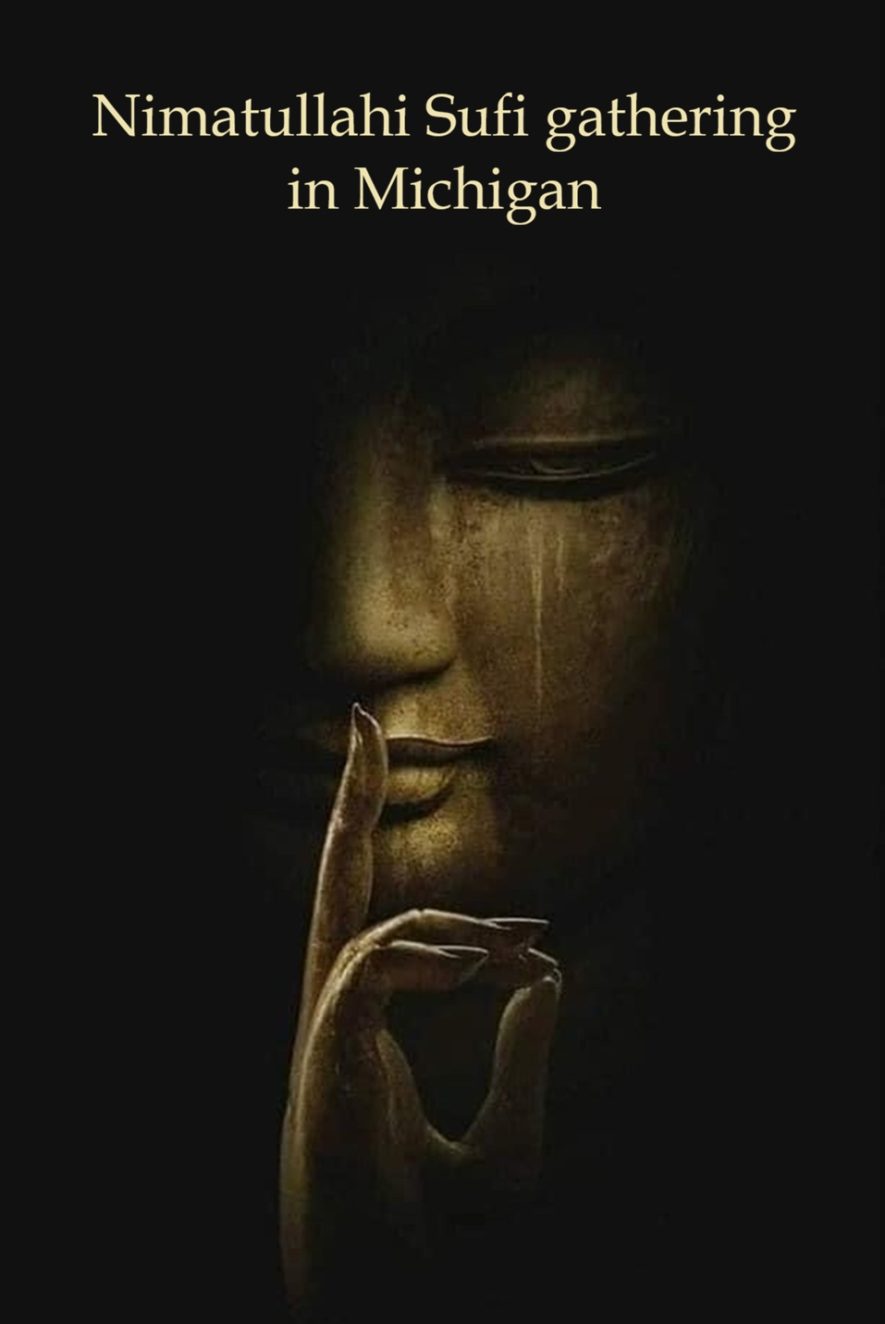
“If we are to survive as a species on this planet, we need to embrace views or belief systems that are inclusive of others.”

By Alireza Nurbakhsh
from Sufi Journal, Issue 84
Altruism has been a central aspect of Persian Sufism since it was developed by such figures as Ibrahim Adham (d. 782), Shaqiq Balkhi (d. 810), Bayazid (d. 874), Abul-Hasan Kharaqani (d. 1033) and Abu Said Abel Khayr (d. 1049) in the region of Khorasan, now the north-eastern part of Iran. Altruism, as developed by these early Khorasanian Sufis and practiced by Persian Sufis for centuries down to the present day, advocates that Sufis—indeed all human beings—should serve God by remaining in society and helping and serving others. It stands in stark contrast with the Sufi tradition that was developed in Baghdad by Junaid (d. 910) and his followers, which advocated the practice of renunciation and withdrawal from society as the central tenet of Sufism.
Altruism is a disposition in human beings and some animals that enables them to do something for other beings with no expectation of reward or even of receiving recognition for one’s altruistic act. Certain acts of altruism come naturally to most of us. If we see a blind woman who needs help to cross a street, we instinctively offer her assistance. If we see destitute people in abject poverty, we are moved and try to ease their pain by giving them some of our possessions. If we see an infant crying, we naturally wish to comfort the child. There are also many examples of altruism in the animal kingdom. Dolphins, for example, have been known to support sick or injured animals by swimming under them for hours at a time and pushing them to the surface so they can breathe.
Recent studies in neuroscience suggest that there is a neurological basis for altruism, that this trait is inherent in us. These experiments show that when we generously place the interests of others before our own, a primitive part of our brain—usually stimulated in response to food and sex—becomes activated, suggesting that altruism is not a superior moral faculty but rather something hard-wired in our brain, that when stimulated makes us feel good (see note 1). In other words, it is natural for us to behave altruistically; it is not instilled in us through religion or moral teachings. It comes to us as easily as eating food.
Altruistic behavior is rooted in empathy, in the ability to put oneself in another’s position and identify with his or her state or situation. Again, recent studies in neuroscience have shown that observing another person’s emotional state activates parts of the brain that are involved in processing the same state in oneself (see note 2). Thus, when we are confronted with the pain of another person, we tend to feel pain ourselves. Research has also shown that in people suffering from certain types of psychopathology the components of neural circuits involved in empathy are impaired, causing them not to care about other people and their feelings.
If altruism and empathy are so natural and basic to our physiology, why then do we so often act selfishly, pursuing what we think is in our best interests without regard to the feelings and interests of others? What has gone wrong? No doubt a comprehensive answer to this question requires a deeper understanding of human nature through a number of disciplines, including genetics, neurophysiology, anthropology and psychology. But here I would like to venture a limited response to this question in terms of our higher cognitive functions.
Recent scientific research shows that animals and humans are more altruistic towards close members of their family and friends than towards their distant kin and non-kin (see note 3). This is because we are more able and willing to empathize with those most similar to ourselves. In particular, empathy increases with similarities in culture and living conditions (see note 4). Put another way, the more dissimilar we feel towards others, the less likely it is that we will empathize with them and treat them with generosity.
There are many factors involved in causing us to feel similar or dissimilar to others, including our family upbringing and the cultural, religious and moral values of the society in which we happen to exist. The more we are indoctrinated by ideologies and value-systems that emphasize our differences from people whose customs or beliefs differ from our own, the more likely it is that we will lack empathy for them. We will tend to perceive such people as “other,” as somehow less than fully human. When we dehumanize others, we are no longer capable of empathizing with them. In the Holocaust and many other cases of genocide or mass killing, people were willing to destroy other people, even their own neighbors, without guilt or remorse because they were led to believe that their victims were so different from them that they were in fact not human beings!
If we are to survive as a species on this planet, we need to embrace views or belief systems that are inclusive of others, that emphasize the essential similarities among people rather than the differences, which we know with a moment’s reflection to be superficial and insignificant in comparison. Our views of the world should reinforce our basic instincts of altruism and empathy. Take, for example, the notion of sin that is an element of many religions. Once one views a person as sinful, one creates a chasm between oneself and that person, thereby blocking the path of empathy. By contrast, consider the concept of compassion, which is an integral part of Buddhist practice. Here we are encouraged to direct our compassion equally towards all beings, without distinction, which is in complete agreement with our natural instincts of empathy and altruism.
Sufism also is known for its inclusive nature. All living creatures are essentially manifestations of one being, one reality, and therefore the entire cosmos is in essence one and the same thing—a reflection of the divine. One who experiences the unity of being will embrace all of humanity and all living things with the utmost feelings of empathy. It is in the spirit of such altruism that Kharaqani placed a sign at the entrance of his khaniqah with the following message: “Whoever comes here should be given food without being asked about their creed and religion.”
The altruism practiced by the early Khorasanian Sufis went beyond the practice of altruism as I have described here. In fact it was defined in terms of caring for the welfare of others before and prior to one’s own welfare and comfort, without any expectation of reward.
‘Attar, one of the greatest Sufi poets (d. 1221), relates the following story about Ibrahim Adham. One day three people were performing their devotional practices in a ruined mosque. After they went to sleep, Ibrahim stood by the door of the mosque until morning. When he was asked later to explain his action, he replied that the weather was very cold and a harsh wind was blowing. Since there was no door to the mosque, he stood in the threshold to make it possible for the people inside to sleep.
Some Sufis have gone so far as to say that one’s altruism is the most important disposition in reaching God. Kharaqani relates the following story to his disciples: There were two brothers, one who devoted himself completely to God and the other who dedicated himself to their mother. After a while the brother who devoted himself to God had a vision in which God tells him that his brother has reached salvation through serving their mother. He was puzzled and asked God for an explanation. “Because,” God replied, “He served the needy and you served the One who has no need.”
Another reason why we lose our empathy for others is our preoccupation with our problems and ourselves. When we become depressed, anxious or angry because our lives are not as we would like we lose the capacity to care about other people. We become so crippled with our own state that we have no time to feel others.
There are, of course, many methods to overcome such negative states, ranging from psychiatric drugs and psychotherapy to the practice of meditation. In the Sufi tradition, however, the main remedy to cure oneself of such negative states is to actively engage in altruistic actions even when one is not inclined to do so. This enforces our natural instincts. Persistent altruism towards one’s spiritual guide and other people, regardless of how one feels or what one wants for oneself, will help the spiritual traveller to rid himself or herself of negative states. This is also borne out by recent psychological studies that indicate there is strong correlation between altruism and the general well-being of an individual. People who engage in helping others suffer significantly less depression and anxiety than those who do not (see note 5). Clearly altruism plays a key factor in our psychological health.
The early Sufis of Khorasan discovered something fundamental about spirituality as well as the biology of our humanity: that the path of enlightenment converges with our basic instinct of empathy and altruism. Their discovery was as significant then as it is relevant now. With the world population increasing at an alarming rate (by the year 2050 it is estimated the world population will be nine and a half billion), and with limited resources in many poor countries, it seems inevitable that conflicts will increase throughout the world. Though we may never be able to eliminate conflict between people, we can certainly contribute to its decline by following the path of the Sufis from Khorasan.
Notes
1 See, for example, Jorge Moll and Jordan Grafman. “Human Fronto-Mesolimbic Networks Guide Decisions About Charitable Donation.” Proceedings of the National Academy of Sciences, October 17, 2006, Vol. 103 (42), pp. 15623-15628.
2 See, for example, Preston, S., & de Waal, F. “Empathy: Its ultimate and proximate bases.” Behavioral and Brain Sciences, 2002, 25(1), pp. 1-71.
3 See, for example, Okasha, Samir. “Biological Altruism.” Stanford Encyclopedia of Philosophy.
4 Hoffman, M.L. Empathy and Moral Development. Cambridge: Cambridge University Press. 2000.
5 See, for example, Hunter, K. I. and Linn, M. W. “Psychosocial differences between elderly volunteers and non-volunteers”, The International Journal of Aging & Human Development, 1980, 12 (3): 205-213.
 michigansufi.com
You must be logged in to post a comment.